


Exploring Circular Solutions and AI Innovation for Future Cities
On 11 June 2026, stakeholders from across the public sector, research community, industry, and innovation ecosystem gathered at Metrohan in Istanbul for the event “Circular Solutions and AI Innovation for Future Cities.” Organised within the framework of the CircularPSP project, the event provided a platform for discussing how cities can translate circular economy ambitions into practical actions through digital innovation and artificial intelligence.

The strong interest in the event reflected the growing importance of circularity and AI in urban development. More than 70 participants registered to attend the event, while the LinkedIn event attracted over 160 registrations, demonstrating significant engagement from city representatives, researchers, businesses, and innovation actors across Europe.
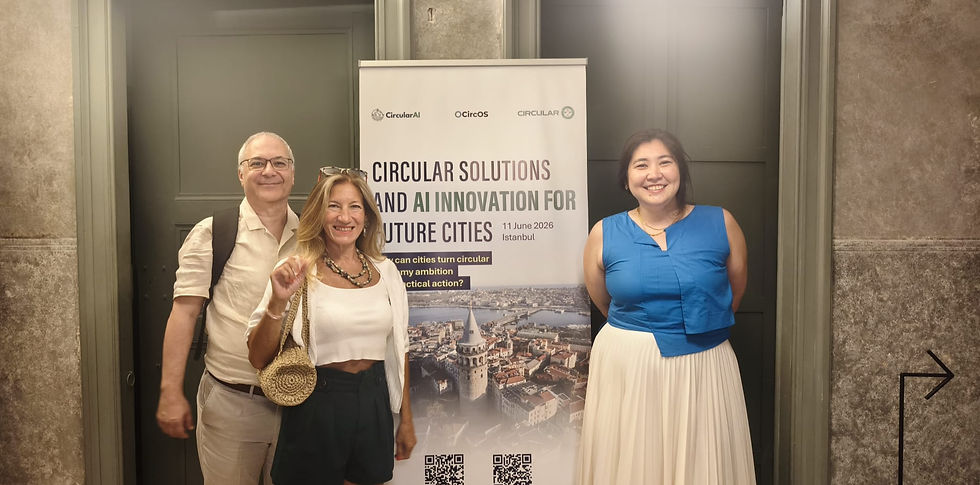
The event brought together municipal representatives, researchers, technology providers, and circular economy practitioners to explore emerging approaches for building more sustainable, resilient, and future-ready urban systems.
Welcoming speeches were by Hasan Mancak, Istanbul Metropolitan Municipality and Georg Vogt, Empirica. Keynote speech was delivered by Francisco Ferreia, Guimarães Municipality which is the European Green Capital 2026. Through keynote presentations, solution demonstrations, and expert discussions, participants exchanged experiences on the opportunities and challenges cities face when pursuing circular transitions.
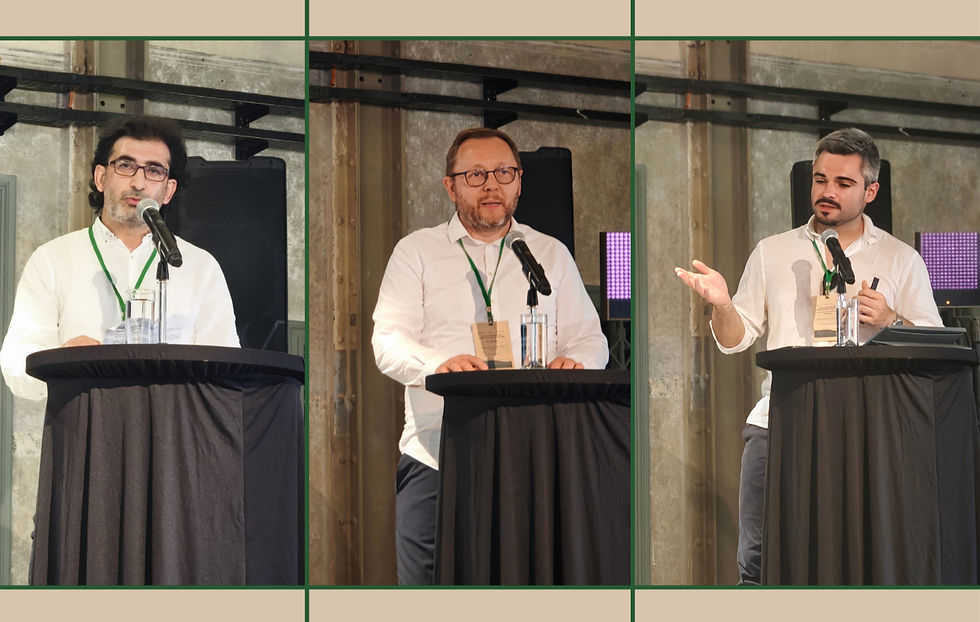
A central part of the programme was the showcase of the CircularAI and CircOS solutions developed within CircularPSP. Participants had the opportunity to see how AI-enabled tools and circularity platforms can support cities in identifying circular opportunities, improving decision-making processes, and facilitating access to knowledge and data needed for effective implementation.
The event also featured a panel discussion titled “Circularity, Sustainability and AI for Cities,” moderated by Eda Telli from TAGES. The session brought together experts representing municipalities, research organisations, environmental service providers, business support organisations, and local government associations to discuss how cities can accelerate circular transformation through collaboration, data-driven decision-making, and innovation.
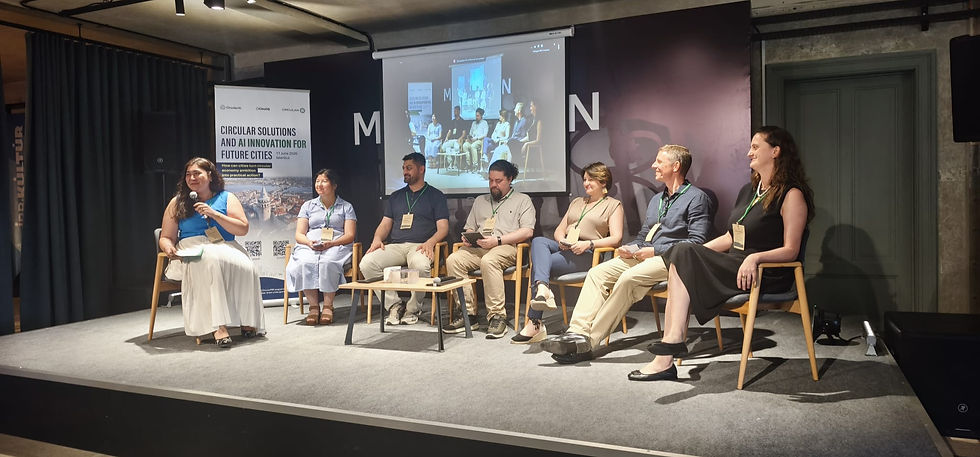
The panel included Yıldız Münevver Koç from Istanbul Metropolitan Municipality, Gökberk Solmaz from İSTAÇ, Victor Kardeby and Henrik Abrahamsson from RISE Research Institutes of Sweden, Savina from ReLondon, and Ana Plavčak from the Association of Municipalities and Towns of Slovenia.
The discussion explored several key themes. Participants highlighted that while artificial intelligence already offers practical value in areas such as resource management, data analysis, and operational optimisation, cities should focus on clearly defined needs and achievable use cases rather than technology adoption for its own sake. Speakers also emphasised the importance of building strong data foundations, ensuring trust and transparency, and establishing governance frameworks that support responsible AI deployment.
From a circular economy perspective, the conversation addressed the persistent challenges cities encounter when moving from strategy to implementation. Issues such as fragmented data, organisational silos, limited resources, and difficulties in scaling successful initiatives were identified as common barriers. At the same time, examples from waste management, urban services, and business support programmes demonstrated how digital tools can help cities improve operational efficiency and identify new circular opportunities.
The role of collaboration emerged as another important topic throughout the discussion. Panelists stressed that successful circular transitions require close cooperation between municipalities, businesses, researchers, and technology providers. Procurement, innovation partnerships, knowledge-sharing networks, and targeted support programmes were identified as valuable mechanisms for creating enabling environments where circular solutions can be tested, adopted, and scaled.
If there is one message to take away from the panel, it is that the future of circular and sustainable cities will not be built by technology alone, nor by municipalities acting in isolation. It will be built through partnerships that bring together cities, researchers, businesses, and citizens around shared goals and practical solutions.


Yorumlar